
How forestry mulching works
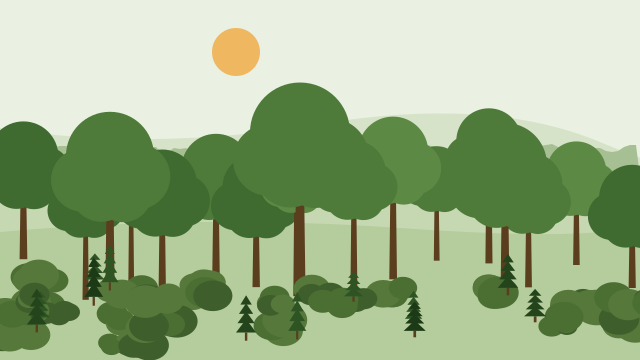
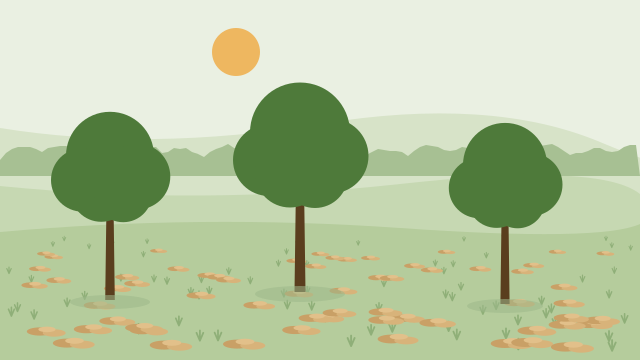
A forestry mulcher is a machine with a mulching head lined with teeth. The head spins fast enough to grind brush and trees into chips. The operator drives it into the brush, and the head grinds what it touches. What used to be brush ends up as a layer of mulch on the ground.
What it leaves behind
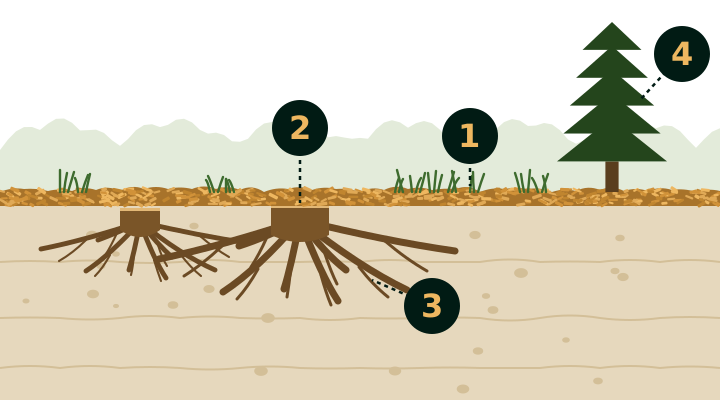
- A layer of mulch. It covers the ground, which can help keep soil from washing away, and it breaks down over time.
- Stumps mulched to ground level or below. No stumps are left sticking up.
- Roots left in the soil. The roots stay put and keep holding the soil.
- The trees you want kept. Flag the ones that stay and we work around them.
Opening up wooded land
Thin overgrown woods, create trails and improve access for hunting, camping or recreation. We clear out the brush and small trees crowding the woods so you can see through them and walk them, and the oaks, walnuts or pines you want stay standing.
- Trails and lanes for walking, ATVs or getting a truck through.
- Hunting land: shooting lanes, trails to your stands and openings for food plots.
- Camping and recreation: room to park, set up camp or just use the woods.
- Fence rows and property lines, opened up so you can see and reach them.
Mark what stays before we come: the trees you want kept, stand trees and the corners of any openings.
Reclaiming overgrown property
Clear unwanted vegetation and reclaim land that's become difficult to access, maintain or enjoy. Leave a field unmowed and ungrazed for a few years and saplings, cedar and brush move in. Before long you can't see the fence or drive a truck across it. Inherited land, a farm that sat empty or a lot nobody kept up was usually good ground once.
Eastern red cedar is a big part of it here. KCUR reported cedar spreading especially fast across parts of Kansas, Missouri and Oklahoma, moving into underused pastures and abandoned lots. On grazing land, University of Nebraska-Lincoln Extension says cedar reduces forage production and complicates livestock handling.
We mulch the cedar, brush and volunteer trees and leave the ground covered, so you can see and use the land again. If you're selling, clearing changes how a property shows: buyers can see the lay of the land, the fences, the pond and the building spots instead of a wall of brush.
Timing
Forestry mulching can be performed year-round.
Good fit for
- Pasture, fields and woods you want open but still covered
- Cedar, brush and saplings you want gone
- Clearing around the trees you want to keep
- Fence rows, trails, lanes and property lines
- Land for hunting, camping or recreation
- Lots that need to be seen before they're sold or built on